Understanding the common causes of fluid pump failure isn’t just a pump engineer’s concern. If you’re a non-technical manager tasked with overseeing assets or operations that rely on pumps, knowing what your operating risks are and the preventative measures you can take is valuable.
So we’ve created this summary of how certain types of fluid pump failure occur and how to prevent them. With it, you’ll be more empowered to make smarter decisions that minimise business interruptions and save money in the long run.
How to Approach Possible Pump Failure: The Bigger Picture
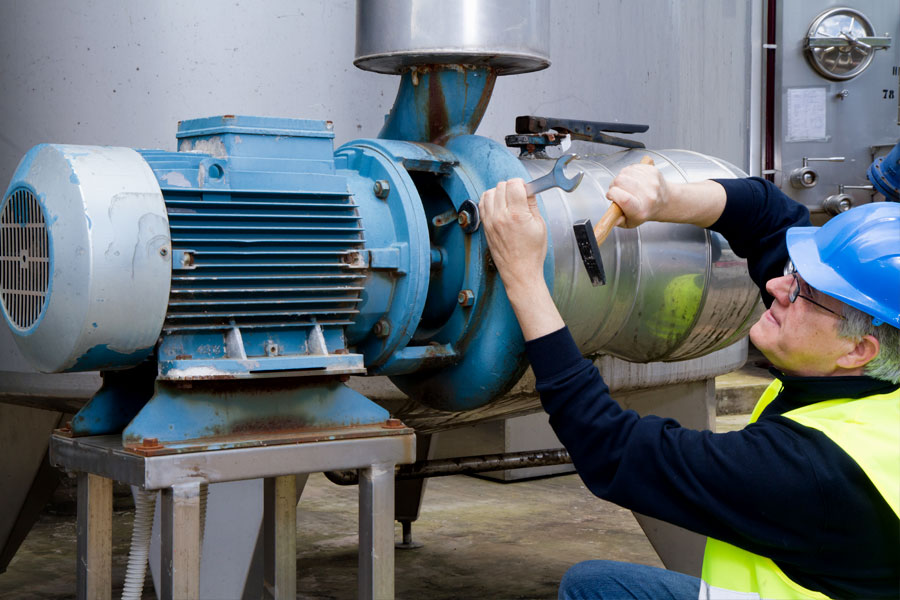
Every preventive measure in pump maintenance is critical to your mission.
For a manager, the consequences of fluid pump failure are significant. Pump downtime can halt production lines, interrupt municipal water supply, or compromise critical process flows. Moreover, emergency pump repairs are costly, often requiring specialist engineers, replacement parts, and overtime labour.
By contrast, a proactive approach focusing on prevention rather than reaction reduces risk, protects budgets, and improves operational continuity. Industry research indicates that the majority of pump failures (around 60%-70%) are preventable with proper design, installation, and regular on-site pump maintenance plans. With prevention, you have real opportunities to reduce your operational risks and long-term expenditure.
Common Fluid Pump Failures and Causes
Pump failures may seem like sudden events. But in most cases, they are the result of gradual stress or misuse.
Let’s examine the most frequent causes of pump failure in industrial contexts. For each, we will explain the technical mechanism, the pump types that are most at risk, the business impact, common causes, and practical steps you can take to prevent it.
Bear in mind that these failures often share some similar causes.
1. Cavitation and Improper NPSH
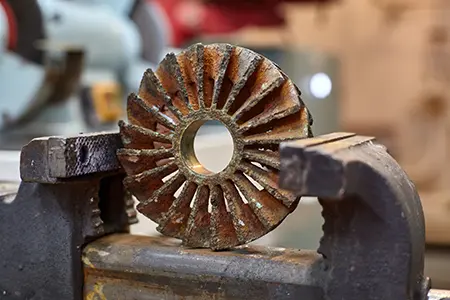
What it is: Vapour bubbles forming due to low suction pressure, then imploding and pitting internal surfaces.
In liquid pumps, gas, air or a vacuum can become your ‘enemy’. Cavitation occurs when vapour bubbles form inside a pump due to low fluid pressure at the suction inlet. When these bubbles collapse in higher-pressure areas, they create micro-implosions that can erode impellers, casings, and other internal components.
When talking about cavitation, your pump engineers will mention “NPSH.” NPSH stands for Net Positive Suction Head. You may think of NPSH as a measurement of the pressure at the pump inlet.* When you have insufficient NPSH, it leads to cavitation.
(*Note: This is just a practical simplification of what NPSH is. NPSH is actually a measurement of head (energy) above vapor pressure, and not just pressure. The measurement considers pressure, velocity, and elevation — details which your engineers would be more concerned with.)
- Highest Risk Pump Types: Centrifugal Pumps and Vertical Turbines. These pumps rely on high-speed impellers; if the fluid pressure drops, cavitation can rapidly occur.
- Lower Risk: Positive Displacement (PD) Pumps (like Progressive Cavity). While they can still cavitate, they are generally better at “pulling” a vacuum without immediate catastrophic erosion.
Business impact:
- Accelerated depreciation of pump assets
- Loss of hydraulic efficiency (and thus, higher electricity costs to run the pump)
- Unplanned downtime, leading to lost production time
- Emergency repair costs
- Operational safety risks in critical applications (e.g., liquid chemical transfers)
Common root causes:
- Excessive Suction Lift, Exceeding Pump Capability : If the pump is positioned too high above the fluid source, the atmospheric pressure cannot push the liquid into the pump fast enough, causing the liquid to “boil” at room temperature.
- Operating Off-Curve: Running a pump at a flow rate far beyond its design capacity increases the velocity at the impeller eye, which causes a sharp drop in local pressure and triggers cavitation.
- System Blockages: Partially closed suction valves, clogged strainers, or “tramp debris” in the intake pipe restrict flow and create a vacuum effect that leads to vapour bubble formation.
- High Fluid Temperatures and Liquid Pressure Drop: As fluid temperature rises (common in industrial process loops or summer bore water), its vapour pressure increases, making it much easier for the liquid to flash into gas inside the pump.
Prevention tips (from our pump engineers):
- Verify NPSH Margins: Ensure the NPSH Available in your system design is always significantly higher than the NPSH Required specified by the manufacturer. (The appropriate safety margin will depend on the system design. A common example safety margin: at least 0.5m to 1.0m.)
- Strategic Intake Design: Minimise the length of suction piping and the number of elbows used, as every fitting creates friction loss that reduces the pressure available to the pump.
- Advanced Monitoring: Install vacuum gauges on the suction side and pressure gauges on the discharge side; a sudden “flickering” needle is often the first warning sign of cavitation before audible noise begins.
- Operator Flow Control: Have your staff trained to use discharge valves (not suction valves) to throttle flow, ensuring the pump stays within its Best Efficiency Point (BEP).
Extra Managerial Insight: Even if you don’t yet fully understand every technical detail, insist that your engineers provide NPSH compliance verification and include cavitation monitoring in maintenance routines. Regularly inspect suction lines, valves, and filters for obstructions and leaks. The cost of ignoring the risks can far exceed any investment you make in prevention.
2. Misalignment and Vibration
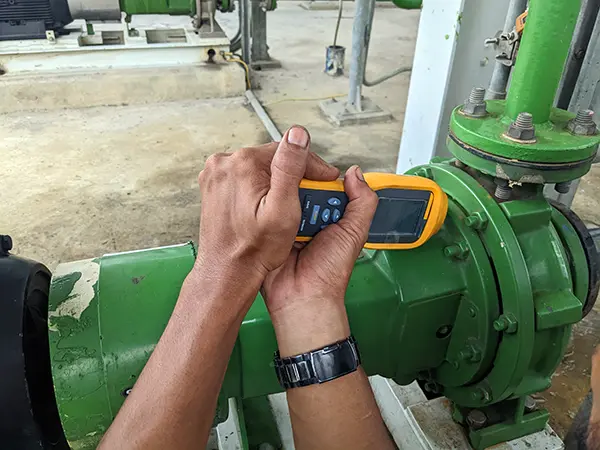
What it is: Pump and motor shafts that aren’t perfectly straight and aligned, causing excessive vibration that shreds bearings and seals.
There are times when a pump’s shaft and driver (motor, gearbox) do not perfectly align. This can be angular, parallel, or combined misalignment.
Misalignment produces vibration, which in turn accelerates wear on bearings, seals, and shafts. Over time, structural integrity can be compromised, and pump failure becomes inevitable.
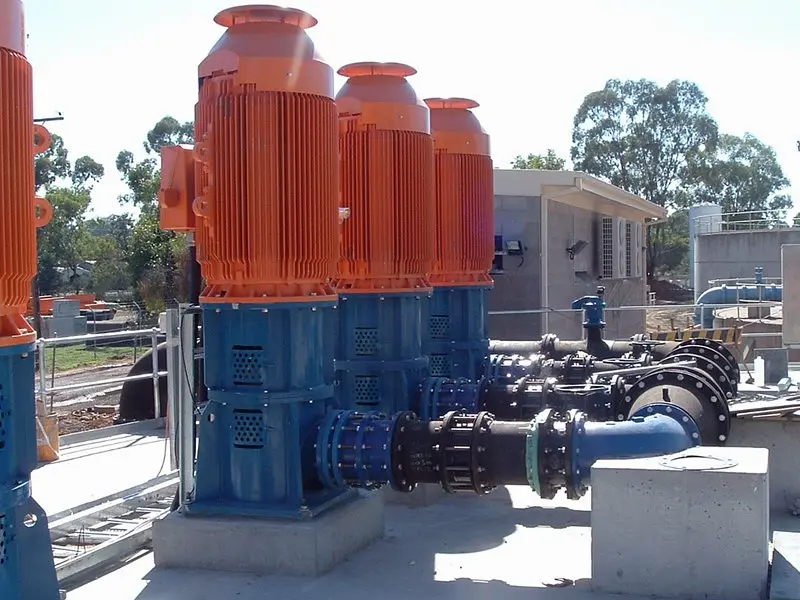
- Highest Risk Pump Types: Vertical Turbine Pumps (VTPs). Because VTPs often have long “line-shafts” (which can sometimes go 100m+ deep), even small misalignments can be amplified at the bottom. They are also uniquely prone to resonance (the vibration caused by the pump’s structure acting like a tuning fork).
- Lower Risk: Close-coupled Submersible Pumps, where the motor and pump are bolted together as a single, factory-aligned unit.
Business impact:
- Excessive energy consumption due to the pump motor working harder to overcome internal resistance
- Frequent unplanned maintenance (emergency repairs and pump off-site overhauls), “nuisance leaks” and overtime labour costs
- Increasingly frequent disruptions to process flow or downtime/production inefficiency
- Catastrophic mechanical failure (e.g., pump shaft snaps, coupling explodes and damages motor) that adds repair expenses to maintenance costs.
- Compromised pump foundations (e.g., cracks) and other structural integrity issues
Common root causes:
- Poor Installation & Foundation Settling Over Time: Even if the pump is aligned at the factory, a “soft foot” (uneven base) or heavy, unsupported piping can pull the pump out of alignment once it is bolted down on-site.
- Inadequate Alignment Procedures & Thermal Expansion: As pumps reach operating temperatures (especially in power plants or chemical processing), the metal expands. If this “thermal growth” wasn’t calculated during the cold alignment process, the shafts will move out of sync during operation.
- Inadequate Support: (Especially for Vertical Turbine Pumps) A lack of proper bracing for the long discharge column or worn-out line-shaft bearings will cause the shaft to “whip,” creating harmonic vibration.
- Coupling Wear: Using damaged or low-quality flexible couplings to “mask” a known alignment issue rather than fixing the root cause leads to premature failure of the drive system.
Prevention tips (from our engineers):
- Precision Laser Alignment: Move away from “straight-edge” methods; use modern laser alignment tools to ensure the pump and motor shafts are collinear, within manufacturer-recommended tolerances.
- Dynamic Vibration Analysis: Implement a “Vibration Fingerprint” for your pumps. By measuring vibration frequencies regularly, engineers can identify if a problem is caused by a bent shaft, a loose bolt, or an unbalanced impeller.
- Eliminate Pipe Stress: Ensure that all inlet and outlet piping is independently supported. Don’t let the pump act as a “pipe hanger,” as the weight of the water-filled pipes can warp the pump casing.
- Resonance Testing: For long-shaft pumps, perform “bump tests” while the pump is off. That helps identify natural frequencies and ensures your Variable Frequency Drive (VFD) is programmed to “skip” those dangerous speeds.
Extra Managerial Insight: Ensure that certified professionals always handle initial installation and alignment. Non-technical managers can further protect operations by mandating periodic realignment checks and vibration analysis, especially after foundation or piping changes.
3. Dry Running
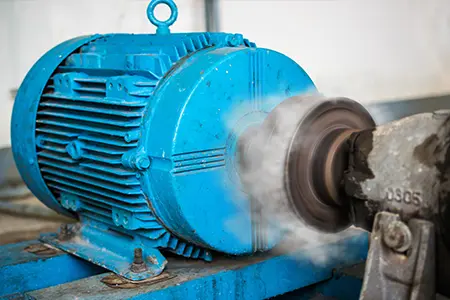
What it is: Operating without fluid, leading to massive heat build-up and seizure of pump components.
Liquid pumps are exactly that: they are designed to transfer fluids. Many of these pumps rely on the fluid being pumped to lubricate internal line-shaft bearings.
Should there be moments when fluid temporarily disappears — or if you start a pump “dry” without pre-lubrication — there will be friction between rotating components. That friction generates extreme heat. This damages seals, bearings, and impellers, often in a matter of minutes.
- Highest Risk Pump Types: Standard Centrifugal and Submersible Pumps. Many of these use the pumped fluid to cool the motor or lubricate the mechanical seal. Running dry can destroy a seal very quickly, sometimes in minutes.
- Lower Risk: Peristaltic (Hose) Pumps or specific Air-Operated Diaphragm (AODD) Pumps are often designed to “run dry.” However, prolonged dry running may still increase wear.
Business impact:
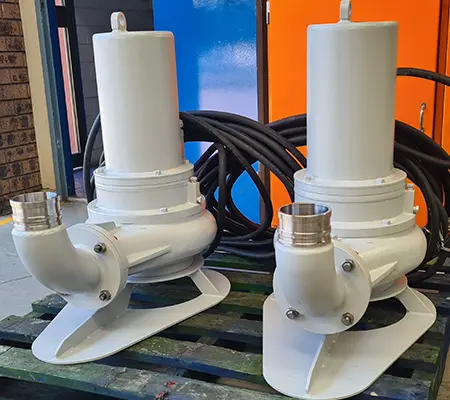
A dry-run event can destroy a pump and halt operations instantly. Beyond repair costs, unplanned downtime can have cascading effects on production, customer service, and safety compliance.
Common root causes:
- Low Fluid Levels in Tanks/Sumps/Reservoirs: If the inflow to a sump is slower than the pump’s discharge, the pump will eventually “run dry” if there is no automatic shut-off.
- Loss of Prime or Suction: Air pockets in the suction line or a “vortex” at the intake (drawing air from the surface) can cause the pump to lose its prime, leaving the internal components spinning in air.
- Malfunctioning Level Sensors or Flow Meters: A failure in an upstream tank-level sensor or a blocked supply line can “starve” the pump of fluid while the motor continues to run at full speed.
- Operator Error / Incorrect Commissioning: Starting a pump for the first time without “priming” the casing or forgetting to pre-lubricate the line-shaft bearings with an external water source.
Prevention tips (from our engineers):
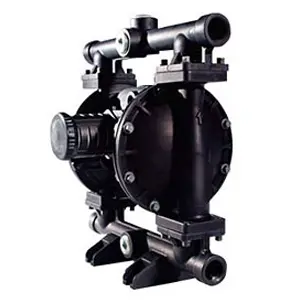
- Automated Level Interlocks: Install redundant “Low-Low” level float switches or ultrasonic sensors in the source tank that are hard-wired to the motor starter to kill power before the fluid disappears.
- Strict Priming SOPs: Develop a “Pre-Start Checklist” for operators that requires physical verification of fluid in the casing and the opening of air vent valves before the “Start” button is pressed.
- Flow and Temperature Sensors: Use “No-Flow” switches in the discharge line or temperature probes on the pump casing; if the casing temperature spikes, it is a clear indicator that the fluid is no longer providing cooling.
- Mechanical Seal Selection: For high-risk applications, specify “Run-Dry” capable mechanical seals or magnetic drive pumps that are engineered with silicon carbide components designed to handle temporary dry periods.
Extra Managerial Insight: Ensuring appropriate monitoring and automated shutdowns is often more cost-effective than replacing destroyed pumps. Even simple safeguards save significant operational expense.
4. Seal and Bearing Failures
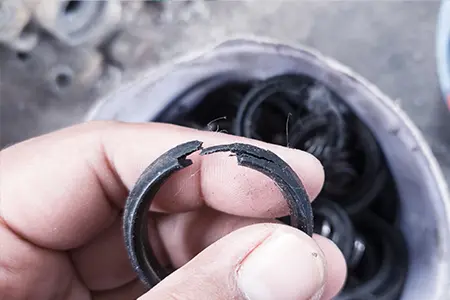
What it is: Damage to seals and bearings, which leads to fluid leaks, increased noise, vibration, misalignment and overheating
Seals prevent fluid from leaking out, while bearings allow smooth rotation of the pump shaft. Naturally, due to these functions, seals and bearings are among the most commonly-worn components for any pump type.
Business impact:
- Leaking seals can create environmental hazards and safety risks.
- Bearing failure causes vibration, noise, and eventual pump breakdown.
- Combined, these failures can lead to sudden and costly unplanned shutdowns.
Common root causes:
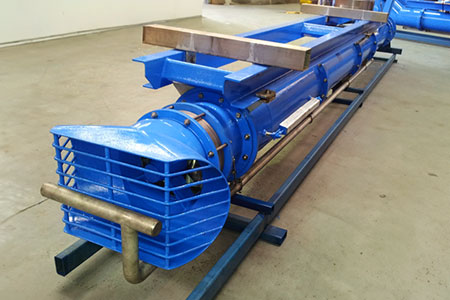
- Normal Wear: Over time, pump parts can and will age.
- Lubrication Mismanagement: Over-greasing is just as dangerous as under-greasing; it causes “churning”, which leads to overheating and seal failure. Contamination of the grease with dust or moisture is also a primary killer of bearings in Australian mine sites.
- Operating Off-Curve: When a pump runs too far from its Best Efficiency Point, the hydraulic forces on the impeller become unbalanced, creating a “radial thrust” that bends the shaft and puts excessive load on the bearings.
- Environmental Contamination: In outdoor installations, rain or wash-down water can enter the bearing housing if the “labyrinth seals” or “bearing isolators” are worn or incorrectly installed.
- Frequent Start/Stops: Each time a pump starts, it undergoes a moment of high torque and stress. Excessive “cycling” (often caused by poorly tuned control systems) causes fatigue in both the mechanical seal faces and the bearing races.
Prevention tips (from our engineers):
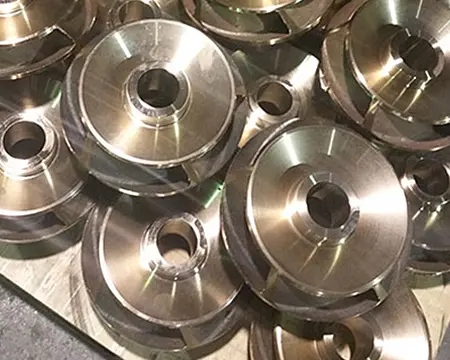
- Condition-Based Monitoring: Use “Bearing Spikes” or temperature stickers on the bearing housing to catch the early signs of heat build-up before the metal begins to flake and fail.
- Precision Lubrication Schedules: Use automated lubricators or “Single-Point” grease injectors to ensure the exact required amount of grease is delivered at the correct intervals, removing human error.
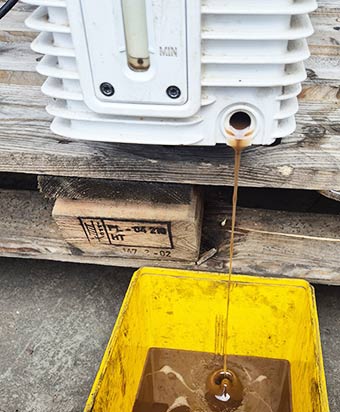
- Oil Analysis: Implement the checking of viscosity, contamination, and wear metals and scheduled oil changes based on operating conditions rather than fixed intervals. (Example: oil changes for vacuum pumps.)
- Seal Flush Systems: For pumps handling dirty or hot fluids, install an API Flush Plan (such as a Plan 11 or Plan 32) to provide a clean, cool environment for the mechanical seal faces.
- Managerial Oversight of Spare Parts: Ensure that replacement seals and bearings are stored in a climate-controlled, vibration-free environment; bearings stored on a vibrating shelf in a workshop can develop “false brinelling” (micro-dents) before they are even installed.
Extra Managerial Insight: Even if you’re not directly responsible for setting pump lubrication schedules, ensure that the engineering team regularly shares condition reports on seals and bearings with you.
5. Over-pressurisation (Dead-heading)
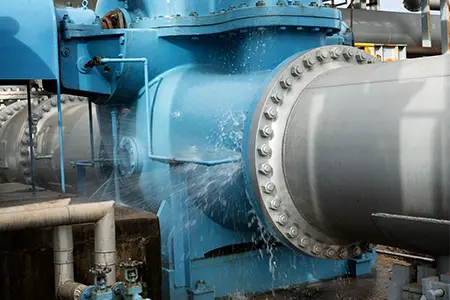
What it is: Running a pump against a closed or blocked discharge valve.
In pump engineering, dead-heading occurs when a pump continues to operate while the discharge path is completely blocked. Because the fluid has nowhere to go, the energy from the motor is converted into heat or extreme pressure.
When a pump is dead-headed, the failure is rarely “quiet.” Depending on the pump type, the fallout can range from a slow thermal melt to a sudden mechanical rupture.
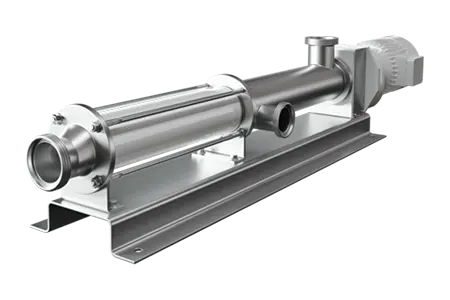
- Highest Risk Pump Types: Positive Displacement Pumps (Gear, Piston, Progressive Cavity). These pumps will keep pushing fluid regardless of pressure. If the path is blocked, the pressure will rise until a pipe bursts or the motor stalls.
- Lower Risk: Centrifugal Pumps. While they will overheat if “dead-headed,” they won’t typically cause an immediate pressure explosion because the impeller just “churns” the water. However, that “churning” can lead to overheating, which in turn may lead to localised fluid boiling. This leads to thermal damage, distortion of mechanical seals and even melted plastic internal components.
Business impact:
- Major pump damage (e.g., cracked pump housing) and complete pump asset write-off
- Secondary or adjacent equipment damage
- Extended production lead times
- Environmental and human safety hazards (from escaping liquids that may be corrosive, infectious, or lethal)
- Potential state government EPA fines and OHS (Occupational Health and Safety) lawsuits
Common root causes:
- Human error in manual systems (i.e., forgetting to open the right valve or accidentally closing a valve)
- Faulty system design (e.g., undersized valves, incorrect valve operation sequencing, lack of recirculation lines)
- Control system and instrumentation failure (e.g., if a pressure sensor lags in sending electrical signals about a blocked line to the central control, making it fail to shut the pump in time)
- Faulty PLC (Programmable Logic Controller) or central computer controlling the pump system
- Physical blockages: contamination, accumulated debris, product solidification, scale build-up
Prevention tips (from our engineers):
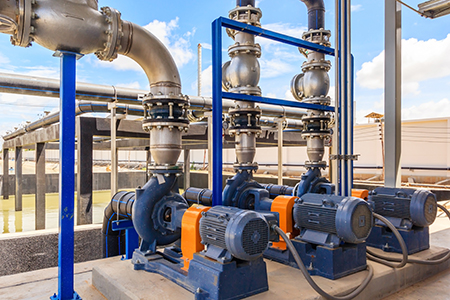
- Audit your interlocks and build sufficient contingencies into your system. Examples: bypass flow lines and a pressure relief valve (PRV) to vent fluid back to the source that opens at X% above the maximum pressure limit; high-pressure cut-out switches; thermal sensors.
- Validate commissioning. During every new pump installation, insist on a “Full-System Walkthrough” where every valve sequence is verified against the pump’s operating manual.
- Guard against human error. Standardise labelling every manual valve with “normally open” or “normally closed” tags; invest in training members of staff on safe practices and the dangers of failure.
Extra Managerial Insight: For a manager, the approach to prevention isn’t just about better valves; it’s about system redundancy and operator culture.
6. Contamination and Abrasive Wear
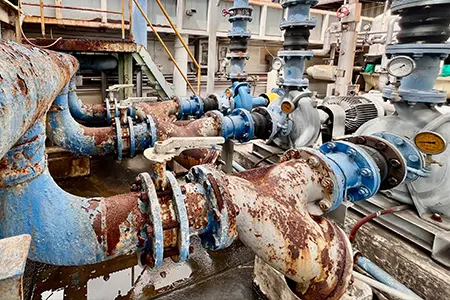
What it is: Solids or grit in the pump gradually erode internal clearances until the pump seizes.
Contamination occurs when foreign particles (e.g., sand, grit, metal filings, or mineral scale) enter the pump’s internal chamber. In a liquid pump, these particles act as an abrasive medium. As the impeller rotates at high speeds, it flings these particles against the internal casing and “wear rings.”
Over time, this grit grinds away the precise clearances between moving and stationary parts. In engineering terms, this increases “internal slip,” where fluid recirculates inside the pump instead of being pushed out through the discharge. That leads to a massive drop in hydraulic efficiency and pressure.
- Highest Risk Pump Types: Gear Pumps and Progressive Cavity Pumps that are not designed for abrasive slurry services. These rely on “tight tolerances” between moving parts. Even a small amount of sand can “score” the internal rotor and stator, causing a massive drop in efficiency.
- Lower Risk: Axial Flow (Propeller) Pumps, which have wider clearances and are designed to move large volumes of water that might contain suspended debris.
Business impact:
- Growing energy bills: before a pump actually fails, you will see an increase in its energy consumption by 10–20% due to reduced efficiency
- Product contamination and expensive recalls (especially for food & beverage, personal hygiene, cosmetics, or pharmaceuticals)
- Reduced pump lifespan: a pump meant to last for 15 years may be rendered beyond economical repair in just 3 years
- Sudden failure of seals and bearings
Common root causes:
- Poor suction Filtration: The absence or failure of suction strainers allows “tramp” material (bolts, rocks, or plastic debris) to enter the pump.
- Dirty Sealing Water: Many large pumps use an external water source to “flush” the mechanical seals. If this flush water is contaminated, it injects grit directly onto the most delicate faces of the pump.
- Inadequate Pipe Cleaning: During new installations or repairs, “construction debris” (welding slag or metal offcuts) left inside the pipes is pushed into the pump upon the first startup.
- Fluid Mismanagement: Using a pump designed for “clean water” (like a standard turbine) to move “dirty water” or slurries.
- Environmental Factors: In Australian mining and agriculture, bores or sumps can “silt up” over time, causing the pump to draw in concentrated sediment from the bottom.
Prevention tips (from our engineers):
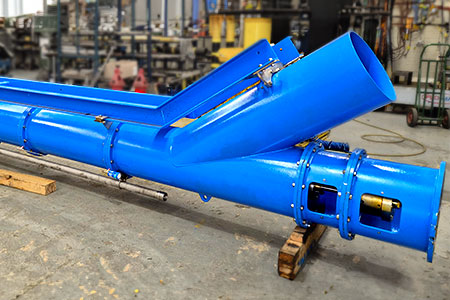
- Hardened Materials: If your fluid contains any solids, use suction strainers and ensure your pump materials (e.g., Duplex Stainless Steel or Zinc-Free Bronze) and hardened coatings for impellers and wear rings (e.g., Chrome Carbide) are rated for the abrasive nature of your fluid.
- Effective Filtration: Use “Duplex Strainers” that allow you to clean one filter while the other is still in operation, ensuring the pump is never unprotected.
- Seal Flushes: Implement a “Cyclone Separator” on the seal flush line to centrifugally remove solids before the water reaches the seal faces.
Extra Managerial Insight: Regularly conduct “hidden efficiency” audits. The best way to tell if your pumps have sustained increased abrasive wear is to track their Power-to-Flow ratio. If your electricity bill (power) is rising but your output (flow) is steady or falling, your pump is likely being “eaten” from the inside by contamination. And don’t wait for a total breakdown; a proactive refurbishment of wear rings can save you thousands in energy costs and prevent a catastrophic casing failure.
Engineering Side Note: What About Air Pumps?
In air pump systems, related fluid dynamics principles apply. However, failure mechanisms differ. The terminology changes.
Here’s a brief comparison of terms:
| Cause of Pump Failure | Liquid Pump (e.g., Turbine Pumps, Axial Flow Pumps) | Air/Gas Pump (e.g., Side Channel Blower, Roots Blower) |
| Pressure Drop | Cavitation (Imploding bubbles) | Loss of Vacuum or Efficiency Drop |
| Blocked Discharge | Dead-heading (Pressure spike) | Thermal Seizure (Overheating air) |
| Contamination | Abrasive Wear (Erosion) | Vane/Scroll Damage (Grit in tight gaps) |
Any instability in an air pump-based system that is analogous to “cavitation” is called “surge.” And the equivalent of “dry running” is overheating due to high compression ratios.
Regardless of the medium (liquid or gas), precision engineering and regular monitoring are your best defences against failure.
Conclusion: Pump Damage Prevention Over Reaction

The most expensive pump is not the one with the highest purchase price; it is the one that fails unexpectedly.
Between emergency labour rates, the scarcity of immediate spare parts, and the cascading revenue loss of unplanned downtime, you cannot take a gamble by fixing equipment only when a problem surfaces. You’ll only inflate the total cost of pump ownership.
For a pump system, true reliability is built on a foundation of proactive oversight.
You must begin by ensuring precise installation. Before you commission a pump build, make sure to verify your site has level foundations. Document any issues (e.g., unsupported piping) and present them to your pump engineering company, along with your specifications or pump duties.
Proactive prevention also continues with rigorous operator training. When your team understands how to read pump curves and recognise early warning signals, you transform your maintenance culture from reactive firefighting to predictive precision.
By shifting your focus to condition-based monitoring and environmental audits, you don’t just extend the life of your pumps. You protect your organisation’s bottom line, safety compliance, and long-term operational continuity.
Secure your pump operations against catastrophic failures now
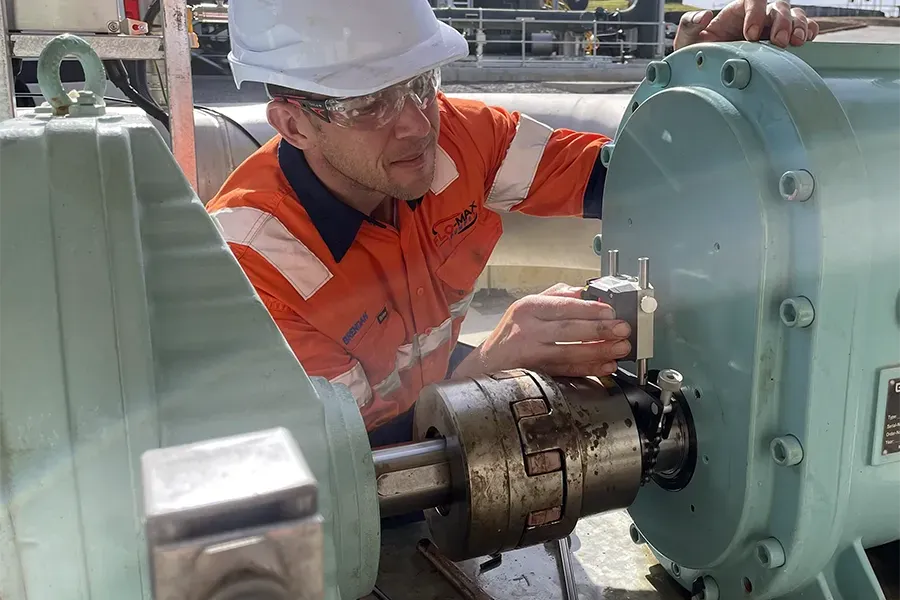
Preventable pump failure is the largest risk to industrial pumps. By understanding cavitation, misalignment, dry running, seal and bearing issues, poor installation, and the costs of reactive maintenance, managers can reduce downtime, protect budgets, and extend pump life.
At Flo-Max Pumps, we provide on-site maintenance, off-site pump repair and custom pump builds for Australian industries. Our experienced engineers combine technical expertise, rigorous testing, and customised solutions to ensure every pump operates reliably and efficiently.
Contact us today to protect your operations and optimise your pumping systems with a partner you can trust.